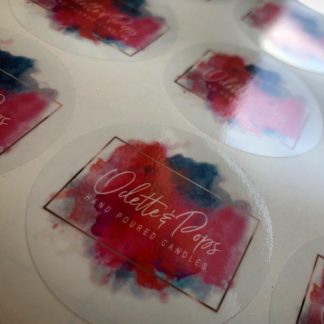
What Are Clear Stickers?
Clear stickers are printed on transparent vinyl film, allowing the surface beneath to show through. When applied to glass, plastic, or any smooth surface, the sticker appears as though the design is printed directly onto the product — creating what is known as the no-label look. This effect is highly sought after in cosmetics, beverages, food packaging, and premium branding.
The transparent vinyl is optically clear with high light transmission, meaning there is no visible haze, yellowing, or milky tint. Once applied, the vinyl itself becomes virtually invisible — only your printed design is seen.
How Clear Stickers Are Printed
Clear sticker printing differs from standard white vinyl printing in one critical way: there is no white background. On white vinyl, the white surface provides the base for all colours. On clear vinyl, that base is missing — so any area not covered by ink will be fully transparent.
The Role of White Ink
White ink is the key to clear sticker printing. Since CMYK inks are translucent by nature, printing them directly onto clear vinyl produces washed-out, see-through colours. To achieve solid, vibrant colours on clear material, a layer of opaque white ink is printed first in the areas where colour is needed. The CMYK artwork is then printed on top of this white base.
This means your print file actually contains two layers:
- White ink layer: Defines which areas are opaque (white base for colour) versus transparent
- CMYK layer: Your visible artwork, printed on top of the white
Intentional Transparency
The beauty of clear stickers is that you control exactly which parts are transparent and which are opaque. You can have a solid logo floating on a transparent background, text that appears to be printed directly on a bottle, or a design where certain elements fade into transparency.
Best Applications for Clear Stickers
Glass Bottles and Jars
Clear labels on glass create a seamless, premium look. Wine bottles, spirit bottles, olive oil jars, honey jars, and cosmetic bottles all benefit from the no-label effect. The product inside becomes part of the visual presentation.
Cosmetics and Skincare
Clear labels are extremely popular in the beauty industry. They allow the product colour to show through — essential for foundations, serums, and coloured cosmetics where the shade is a selling point.
Window Stickers
Shop window decals, car window stickers, and glass door signage all benefit from clear vinyl. The design appears to float on the glass with no visible label edge.
Product Packaging
For cellophane bags, clear pouches, and transparent packaging, clear labels maintain the clean, uncluttered appearance while still communicating brand and product information.
Gloss Clear vs Matte Clear
Clear vinyl is available in both gloss and matte finishes:
- Gloss clear: The most common option. The vinyl is perfectly smooth and transparent, blending seamlessly with glass and shiny surfaces. Best for glass bottles, windows, and any glossy surface.
- Matte clear: Has a subtle frosted or satin appearance. Creates a soft-focus transparency effect. Best for matte-finished containers, frosted glass, or when a more tactile feel is desired.
Design Tips for Clear Stickers
- Think about the surface colour: Your sticker will take on the colour of whatever it is applied to. A red label on a green bottle will look very different from the same label on clear glass.
- Use white ink strategically: Areas where you want solid colour need white ink behind them. Areas you want transparent should have no white ink.
- Outlines and borders: Adding a thin white outline around text or graphics helps them stand out against any background colour.
- Test on your actual product: The final appearance depends heavily on the surface. Always order samples and apply them to your product before bulk ordering.
- Consider edge visibility: Die-cut clear stickers to the exact shape of your design to minimise visible label edges. Rectangular cuts on clear vinyl look like clear stickers — contour cuts look like direct printing.
Durability
Clear vinyl stickers share the same durability characteristics as white vinyl:
- Fully waterproof
- 3-5 years outdoor UV resistance
- Temperature range: -20°C to +80°C
- Resistant to oils, chemicals, and cleaning products
- Permanent acrylic adhesive
Ordering Clear Stickers
At StickerNation, custom clear stickers are printed on premium optically clear vinyl with UV-cured inks and white ink capability. Our online designer lets you control exactly which areas are transparent and which have a white ink base, with a live preview of the final result.